VegetalTime
Botanycopied to: LibFoam:tale_of_vegetal_time
The Goal
- to make the player feel like a plant
tools to the goal
- simulation of slow time scales
- the real challenge is to make it interesting and engaging to have stillness
- chaos. nature is chaotic. (chaos as a design tool)
- Chaotic systems are systems that look random but aren't. They are actually deterministic systems (predictable if you have enough information) governed by physical laws, that are very difficult to predict accurately (a commonly used example is weather forecasting) WikiPedia:Chaos
- Chaos features three main characteristics:
- it is a bottomless gulf where anything falls endlessly. This radically contrasts with the Earth that emerges from it to offer a stable ground.
- it is a place without any possible orientation, where anything falls in every direction.
- it is a space that separates, that divides: after the Earth and the Sky parted, Chaos remains between both of them
- Chaos features three main characteristics:
- Chaotic systems are systems that look random but aren't. They are actually deterministic systems (predictable if you have enough information) governed by physical laws, that are very difficult to predict accurately (a commonly used example is weather forecasting) WikiPedia:Chaos
- the wind
- the feel of the sun
- the water flowing through your veins
- (is it a sound?)
Game Genre
All this time we've been thinking about RPG's because of the terminology of guilds and classes. BUT
The Ultimate Expression of Brainless Gameplay is the "casual game" genre.
and The King of all casual games is Match Three type puzzles.
e.g.
http://www.bigfishgames.com/download-games/genres/17/match-3.html
Dealing with time
Use seasons as tools
All seasons exist at the same time
the plant can "dream" of a different season
or shift between the seasons at will
to take advantage of the benefits that season has to offer.
(use in 'battle' between plants, an invading vine or weed for example.)
uuh, need to think about how this would work more in-depth but
suffice to say that one can see the same garden shifting through any time of year.
Graphical Presentation
probably 2d will be more flexible (but let's keep our options open)
anyway, 2d -like:
somewhere between
Puzzle Quest
http://pix3lnati0n.files.wordpress.com/2008/01/puzzlequest.jpg
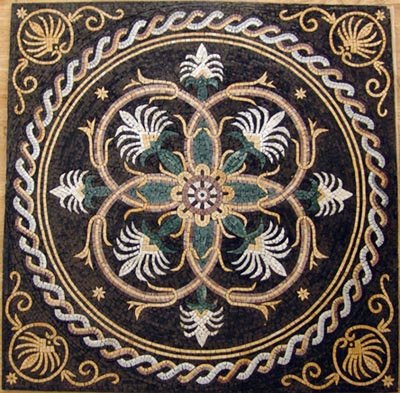
and an ornate mosaic tile
http://img.alibaba.com/photo/11828819/Mosaic_Tile_Pool_Floor.jpg
the game of life
http://bendiken.net/images/scripts/javascript/game-of-life.png


Hi,
I've done some research on time perception in humans and as we want to addapt people a more vegetal time, here's some main points.
Alton DeLong observed that people when asked to imagine sitting in one of three miniature waiting-rooms of different sizes, reported different estimations of time passed during the experiment. The smaller the waitingroom, the longer they estimated their waiting time. (Probably that's part of the idea of putting a prisoner in a small cell.) Using differently sized screens for playing the video-game Pong, he noticed in addition that people scored better in the smallest representations. It improved their concentration (reducing consciousness to a focal point.)
Bin Xuan (et all.) have extended this research to show that larger (more intense) stimuli; numeric, motion or colour, are judged to be longer.
Much of this has been used by artist for centuries. Clearly our perception of time differs in Jacob van Ruysdael's 'View of Haarlem' to that in Caravaggio's 'Boy bitten by a Lizard'. The actual processes depicted unfold at a realistic speed, but Ruysdael's picture shows the world at a much smaller scale. A whole landscape is fitted in it, which seems more eternal. In Caravaggio's only a person fits in so time seems more momentary. It's interesting to see what visual elements they use to accheive this, like lighting, perspective and colour.
Theun.