
Good morning. I'm Auriea Harvey. I started making art on the internet in the nineties, then designed videogames, and for the last few years I've been making sculpture from software. I model a form digitally, and then it has to become an object. Deepening this practice, and the question of how sculptures are fabricated today, are my research project.

(to fill: one material, many states. From the web pages of the nineties to Fauna in plaster, bronze and terracotta, the same material underneath. Your September line may help: "I am a sculptor. My material is the polygon, a form that can become marble, glass, faience, or light. My subject is always the character.")
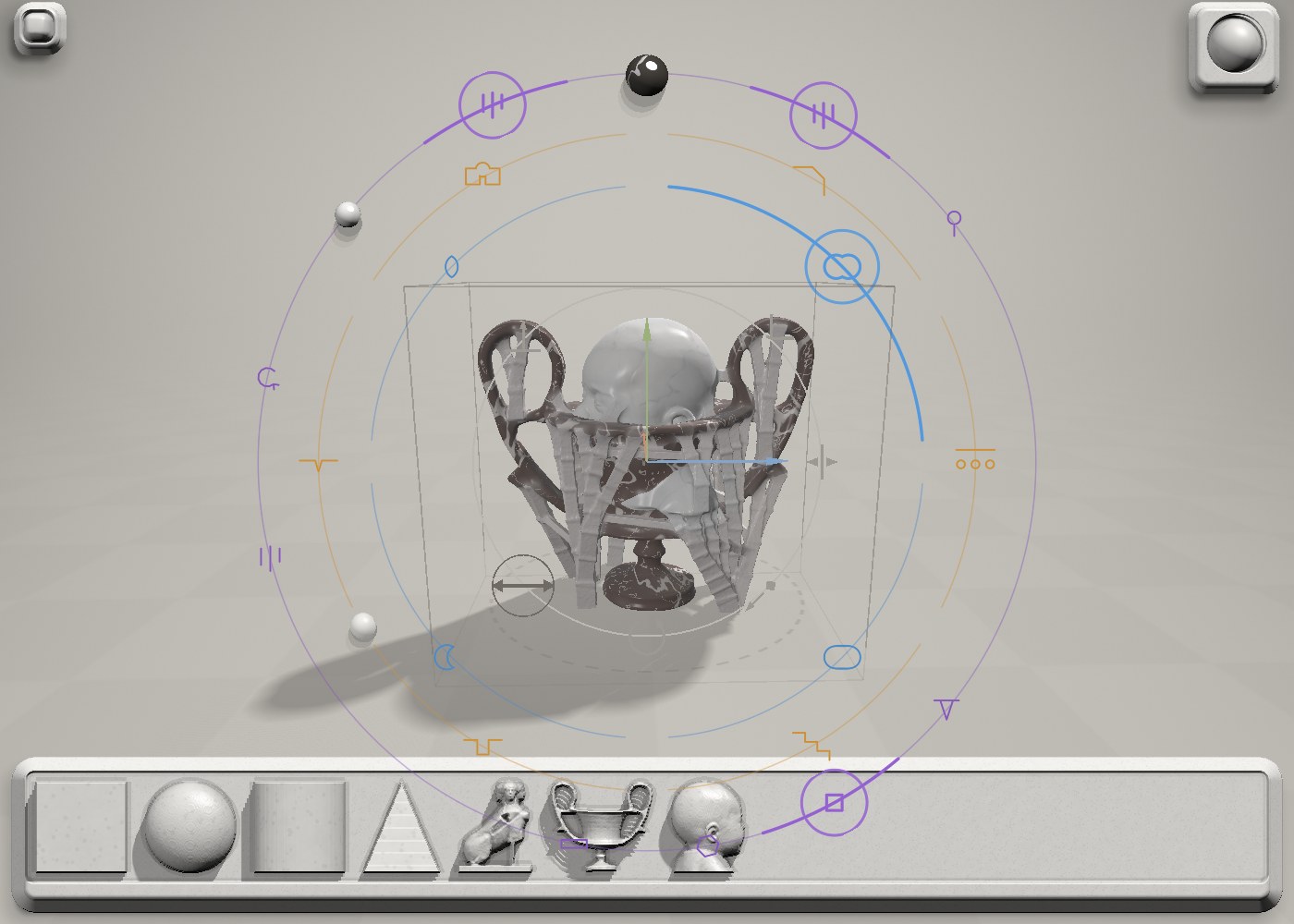
(to fill: the polygon itself. Turn the model on the projector while you speak. A model won't survive a Power Point export, so keep a still of it for the backup.)
(to fill: the two meanings of the title. Fabrication is making, by hands. Fabrication is also invention, what AI does when it makes a plausible form with no origin. An honest fabrication names its hands and keeps its provenance. The first half of the talk is the first meaning, the second half the second.)
Most of my work I print on my own 3D printers, and my sculpture involves a lot of personal handwork. But I've now had three major experiences of fabrication involving other hands.

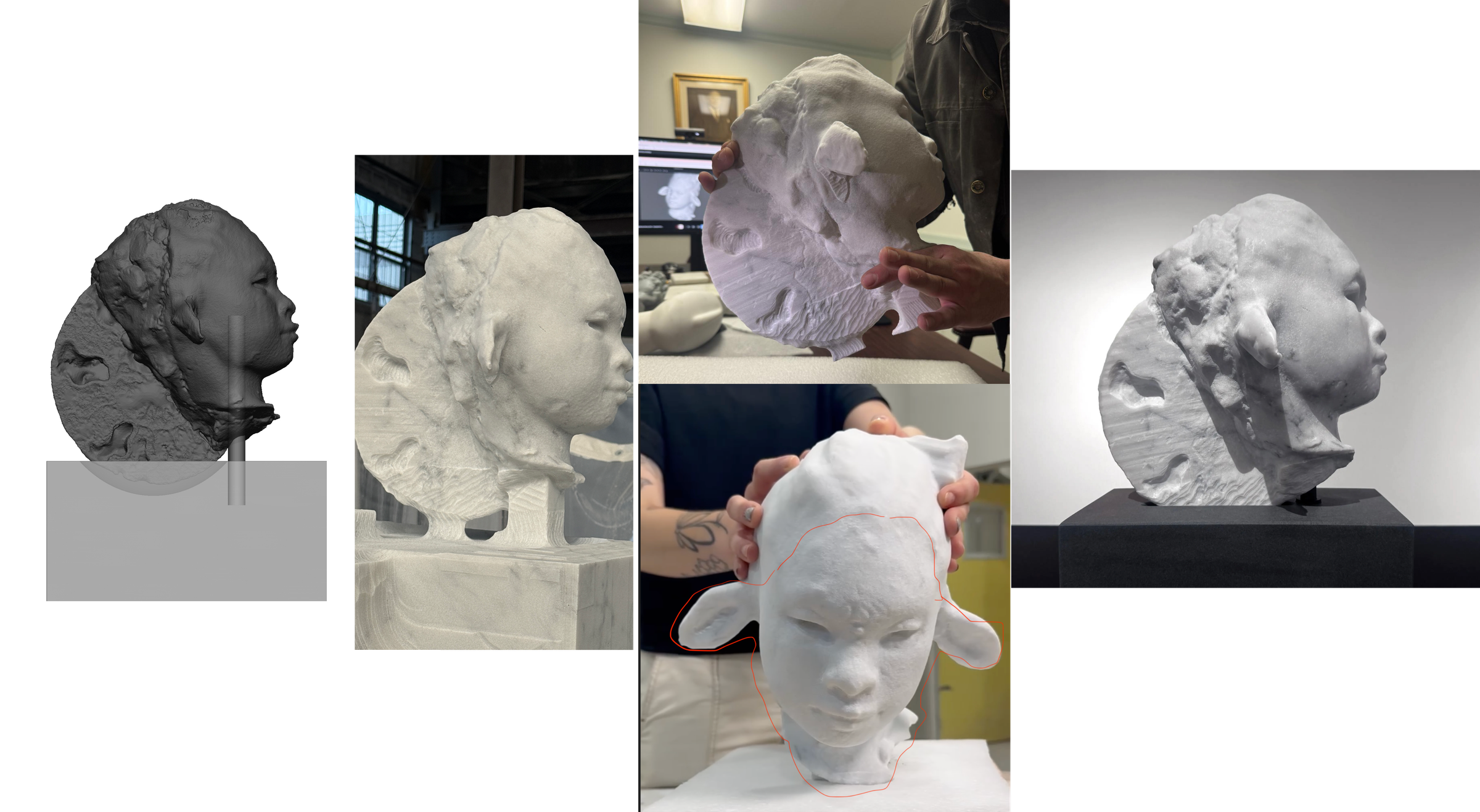
The first was my first marble piece, made by Monumental Labs in New York. While it was being made I never saw it in person or touched it, and when they asked me what I wanted, I didn't know how to answer, as I didn't speak the language of stone. All decisions were made via Whats App photos and video calls. At the time, this was a deeply unsatisfactory experience for me. But it did fulfil a desire I had to have a sculpture materialize someplace I could not go. Something deeply interesting to me, because I believe digital sculpture solves the often inconvenient demand of having to move my body from one country to another, or having to spend a lot of money on shipping, money which I would prefer goes into the making of the sculpture itself.
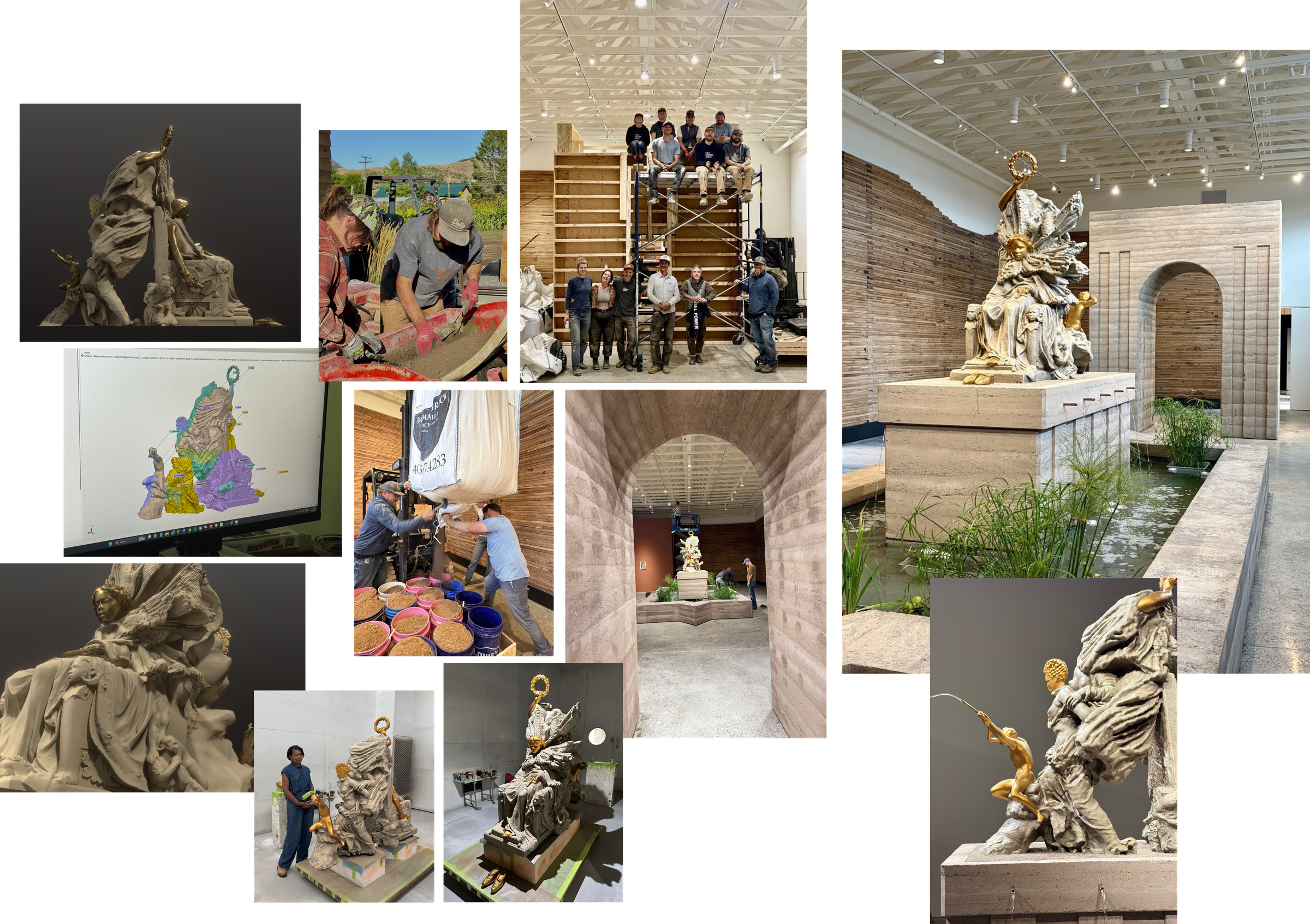
The second was Edmonia Triumphalis. The figure was made by Johnson Atelier, at factory scale, impersonal and standard, and the cost and weight meant I had to compromise on the material: urethane foam with a hard coat, not stone and bronze as I'd wanted. But the installation itself, in Bozeman, Montana, was different. The fountain basin and the triumphal arch are made of rammed earth. Basically the material is the earth itself. Tinworks Art commissioned it, and with Montana State University students, a local architect and a producer on their team, a whole community built it. I wasn't there, and I still felt part of it. I did go see the sculpture in progress in New Jersey and for the final install and opening festivities in Bozeman, and I'm glad I did. The teamwork made the dream work. But it took two years, the producer's sanity, and funding from the Via Art Fund to make it happen.
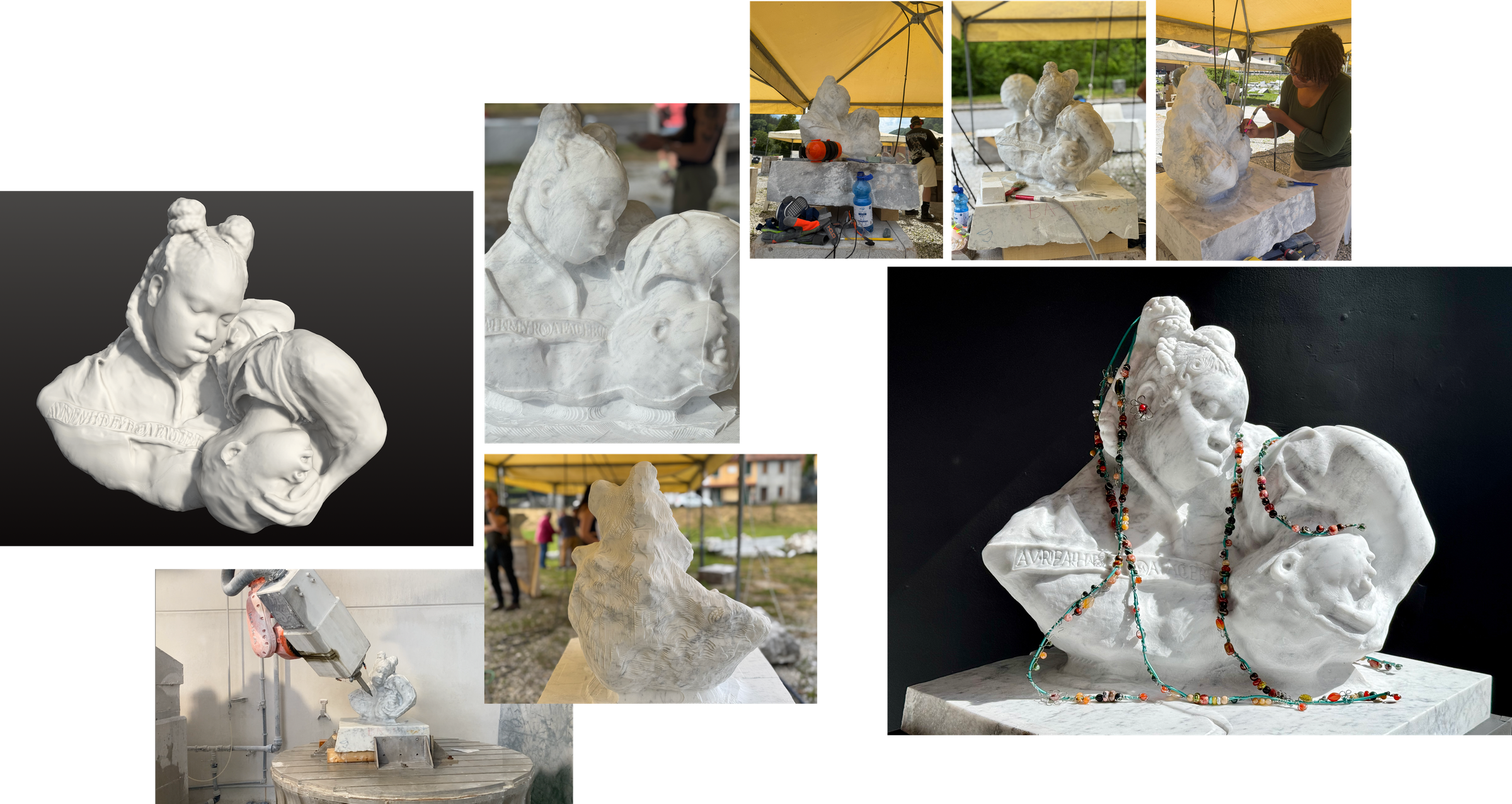
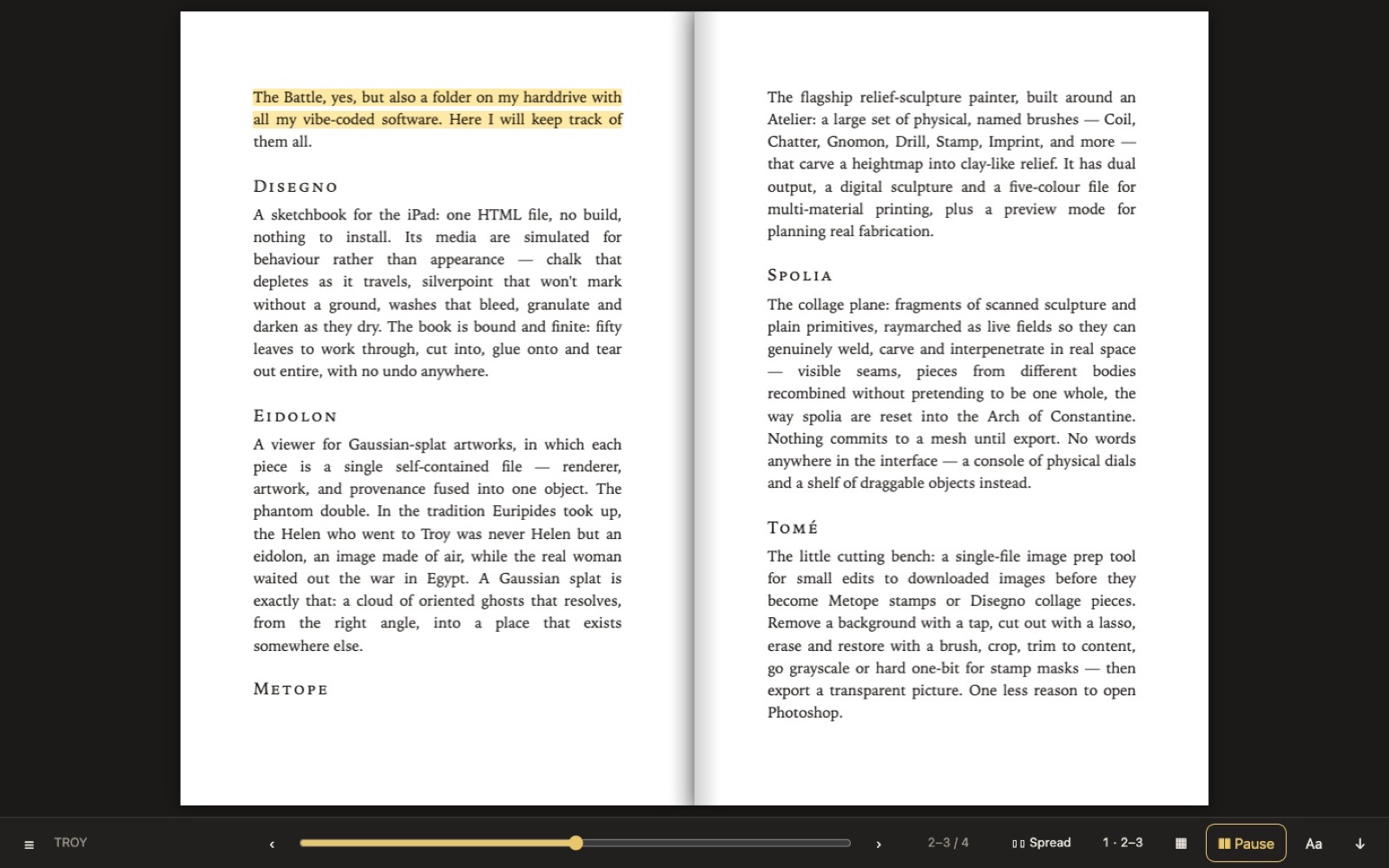
The third was Mother/Child, milled by robot at the Digital Stone Project in Garfagnana, in Tuscany, and finished by my hand. I was there, and I touched it. Working the marble myself is where I learned how to more directly tie the digital file to the process of CNC milling, and it's where the questions behind this research began. It's also where I wrote my first vibecoded apps, Tincture, Metope and Spolia.
(to fill: the research question, asked out loud. What craft is, and then what yours is, the craft you feel is being lost.)
For me the file is the artwork. It's the model I spend months shaping, and every object comes from it. The figure for Edmonia Triumphalis was a file before it was anything else. It's also the least valued part of the process for the art world, which doesn't understand what digital art is or could be: people want the marble or the bronze and treat the file as a receipt. But it is my stance that most art today is made with digital processes in the mix, and most sculpture involves 3D processes at some point. And that the 3D artist is the terribly underrated MVP of sculpture in the 21st century.
(to fill: your working definition of craft. Hands must be involved.)
(picture to add: a jig from your own workshop, perhaps from the Guardians CNC reliefs)
(to fill: Clement Valla's "AI and Jig Thinking". A jig is a tool a maker builds for one job, and jigs are kept, reused, handed down, treasured in a workshop. Software moulded by one mind for its own use verges on the artifact.)
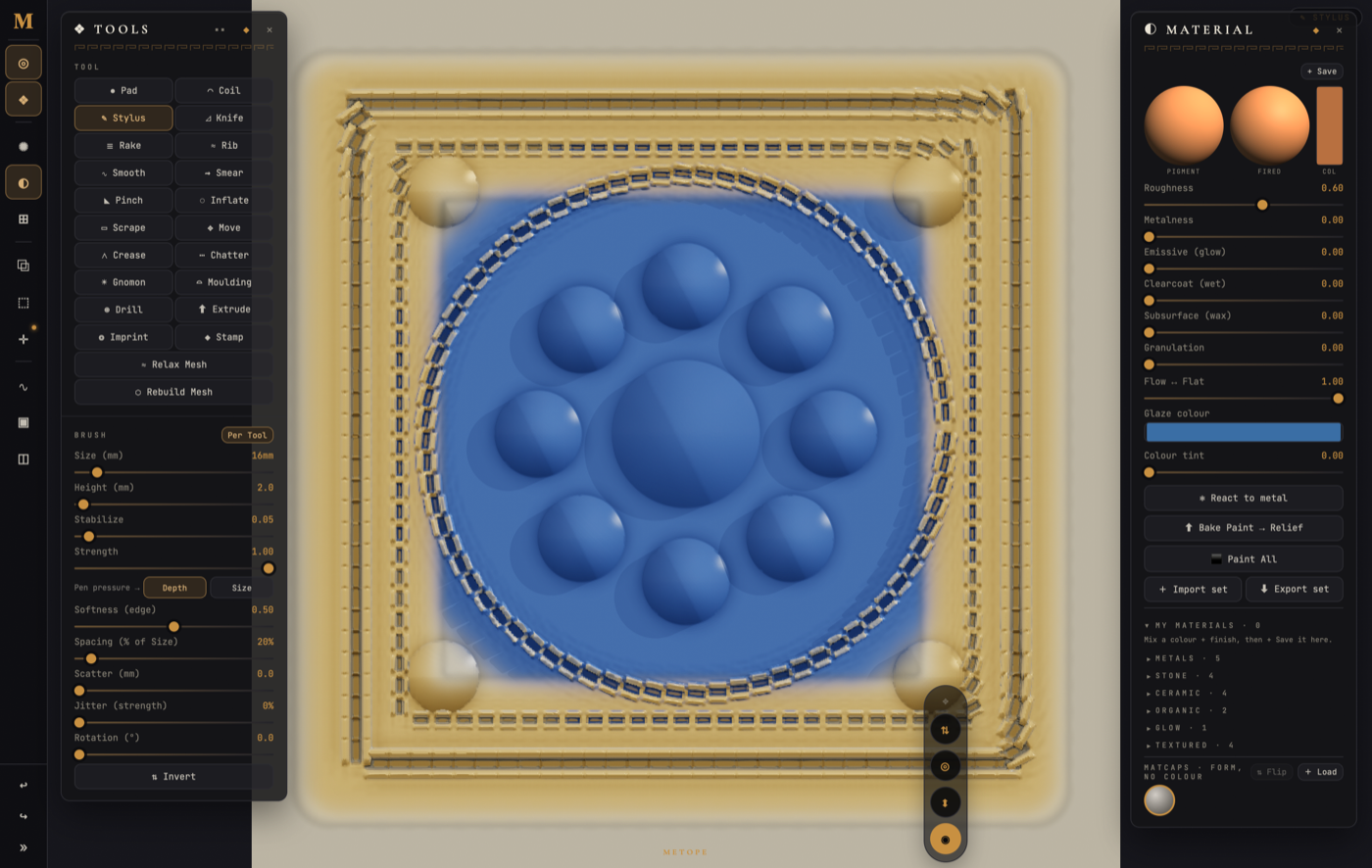
Metope is a relief-carving studio that runs in a browser. Its brushes displace a height map, so what I paint is real depth that I can light, mill or print. Spolia is a collage plane, where scanned fragments sit in 3D space and weld, carve and overlap according to procedural aesthetic rules. It is based on the way antique fragments, or "spolia", were reset into walls in Rome. I built both with Claude, and it fulfilled not only my desire to conjure up software at will, freeing my mind from decades of servitude to the machine, but also made me fascinated by what idiosyncratic, artist-made software tools will mean for digital art going forward.
(to fill: if you can, show 30 to 60 seconds of one of them working here.)

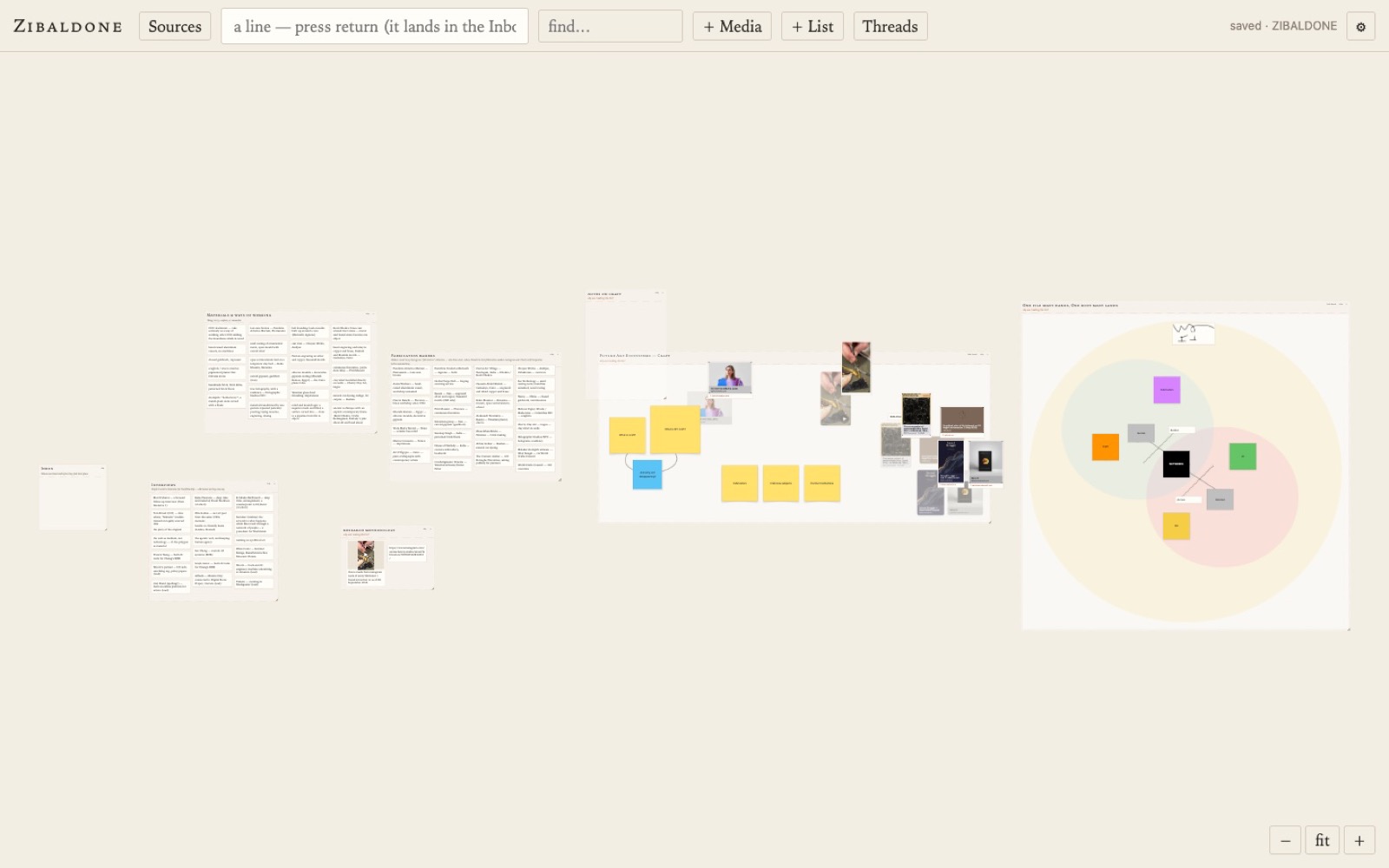
(to fill: Zibaldone, Lector and Interprete, the tools you built for the research itself, and this wiki. Nothing from the interviews.)
Meanwhile, prompt-based 3D AI is moving into exactly the place of the 3D artist, the making of 3D forms. So I have to watch it closely as it comes for MY craft. My position is to use it as a tool, not as a replacement. And if possible to unite with other craftspeople who see their art minimised by the hype cycles of the digital.
(to fill: the second meaning of fabrication. AI's forms are invented: statistical averages, with no particular origin and no hand.)

(picture to add beside it: one AI-generated figure)
(to fill: one pair, no mockery. Swap in a Mystery v5 image if you have one. Your September line: "In an age when algorithms generate bodies by statistical averaging, producing forms with no specific origin, no particular hand, no accumulated decisions, my practice insists on provenance.")
So my question has been this: what if software could carry knowledge between a fabricating artisan and me, so a form made in my studio can be made somewhere else? What does a human network of artisans look like, one that gets me, and potentially others, away from commercial fabrication, materializing work worldwide and at human scale? How can AI-made tool chains be in service to that connection?
My proposal is to use AI as a translation layer between digital craft and handcraft, so a form made in one place can be made by many hands in another, as true collaborators and not clients and vendors. My guiding principle is that human judgment must direct the tool, never the other way round.
Where are the hands? I started by saving makers on Instagram, because lots of artisans look for work by posting there, as do I. I collected 33 posts from 29 accounts, clustered in Italy, Egypt, Iran and South Asia, but I found I had seen almost nothing in Latin America, Africa or East Asia. So I went looking further, using AI to help me search in other languages and put them on a globe. This helped me to understand the types of hands I felt affinity for. This is a map of who I'd like to collaborate with, based on what they show.
(to fill: the show concept. Name the Alexandria workshop only if they are happy to be named.)
My guide is the encyclical Magnifica Humanitas, Pope Leo XIV on AI and humanity. I can't summarize it in a minute. What I hold onto is that human conscience and judgment must remain the ones directing any technical process. In practice that means a maker should never have to become a technician for this to work. All of these questions, with the human maker at the core, are what will lead my new body of work.
auriea.art